Social isolation
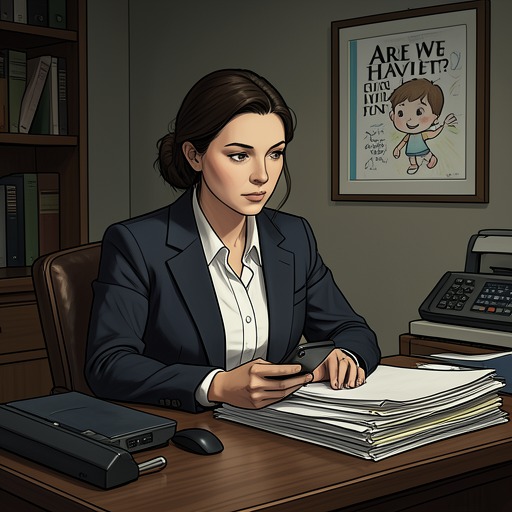
Are We Having Fun YetSocial isolation is one of the defining pressures of the parenting experience described in the book. It appears most sharply when mothers are exhausted, cut off from adult conversation, unable to leave demanding routines, or made to believe that asking for relief is selfish. The narrative counters that isolation by showing how relatives, spouses, friends, babysitters, organized support, and even public recognition can restore a parent’s capacity to care.
Definition and Early Maternal Experience
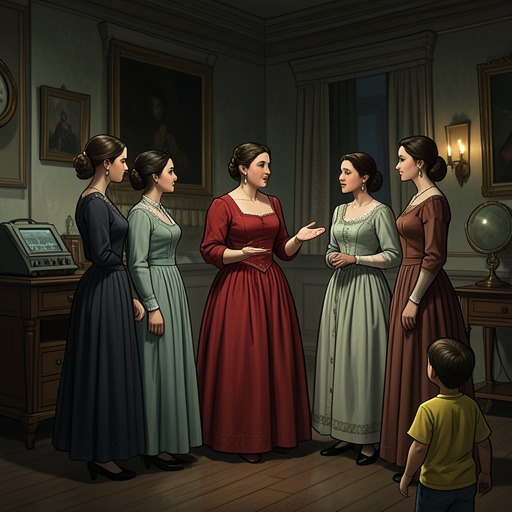
Social isolation is described as more than being physically alone. For a new mother, it can mean having too little rest, confidence, self-esteem, and adult conversation while spending the day inside an exhausting cycle of infant care. The resulting condition combines tears, inadequacy, resentment, exhaustion, and a sense of being cut off from ordinary adult life. These feelings recur across mothers’ experiences rather than belonging to one exceptional case.
Kay Willis recalls that her own first baby exposed her to this reality. She was exhausted and teary, felt inadequate and guilty, and did not love her new role every minute. Her distress was intensified by the fact that nobody had told her what parenting would really be like. The absence of preparation became part of the isolation: she was expected to perform an immense role while lacking both reliable information and permission to acknowledge how difficult it was.
The book also describes isolation as a socially enforced condition. Mothers may worry that requesting help will make their families consider them selfish, or argue that a good mother must sacrifice every waking moment to her children. The text rejects that standard, insisting that no child deserves a martyr for a mother. A mother who never replenishes her emotional resources becomes more vulnerable to feeling overwhelmed, trapped, resentful, and unable to respond generously to the people who depend on her.
Isolation in Daily Family Life
The pressures become especially visible in the small humiliations and restrictions of ordinary life. One mother of three boys under age four reports being lonely because her children had been barred from the library and she had been banned from the supermarket when accompanied by them. The details turn social isolation into a concrete loss of public space: routine errands and cultural activities, normally modest forms of participation in community life, become inaccessible because childcare demands follow her everywhere.
A single father, Robert Miner, learns “mother stress” through direct exposure to the same unrelenting conditions. He must rise repeatedly at night to comfort a sick baby after an exhausting day, manage housework while holding children, cook under impossible physical constraints, fend off a bill collector, and then face fresh laundry disasters and vomiting children. When a rare moment alone arrives, he needs it for crying. His account challenges the assumption that this burden is an inherent female emotional defect; the text argues instead that mothers are not naturally scattered or edgy, but can become so under fatigue, enforced isolation, and relentless demands, whatever their sex.
The home itself can intensify or relieve the condition. The book argues that mothers usually create much of the emotional atmosphere in which children grow, whether they work outside the home full-time, part-time, or not at all. This responsibility gives the mother’s emotional state consequences for the entire household: isolation is not sealed inside one person but can alter the climate experienced by children and other family members.
Support as a Buffer Against Isolation
The book’s central response to isolation is practical support rather than moral exhortation. Kay Willis explains that her enjoyment of being the mother of ten children did not result from unusual parenting talent or ignorance of the difficulties. It was made possible by help from her mother and her husband, who repeatedly insisted that rest, revival, relaxation, and renewal belong in her life. They reminded her that she was important and that no one else could do what she was doing.
Her mother made that principle into a scheduled arrangement. Kay received every Thursday afternoon off, regardless of how difficult the preceding days had been. The break allowed her to walk away, refuel, and return restored. Because the family expected her absence, the time away became part of family life rather than an illicit escape from it. Its value lay not only in the hours themselves but in the change the family could recognize when she came back recharged.
The same logic shaped the response to Kay’s move into a larger house in Rutherford, New Jersey, shortly before the birth of her sixth child. Her mother worried about the stairs, the extra housework, and the burden the building might place on Kay. She offered to pay for a babysitter every day at 5 P.M., not so Kay could complete another task but so she could do nothing: rest, freshen up, put on lipstick, and pull herself together. The arrangement treats recovery as legitimate work. A parent’s need to pause is not evidence of failure; it is a condition for continuing.
The book describes time off as the equivalent of money in an emotional bank account. A mother can draw on that reserve when life lets her down or when feeling overwhelmed and trapped becomes unbearable. Rest therefore functions as a preventive resource, not a luxury purchased only after collapse. If no one else is available to provide care, the mother is told to care for herself, because the alternative is depletion that harms both judgment and family relationships.
From Private Isolation to Shared Recognition
Isolation is also challenged through collective recognition. Mothers Matter, the support group founded by Kay Willis, brings parents together and tells them that they are the real professionals in parenting. Its programs address mothers and fathers, including a session devoted entirely to dads, as well as new mothers, single parents, full-time earning-money mothers, parents of adolescents, and grandparents. The range of participants treats isolation as a condition produced by different family circumstances rather than a problem belonging only to one stereotype of motherhood.
Kay’s authority is grounded in experience made public. Her work appears in Good Housekeeping and on programs including Oprah, Good Morning America, The Today Show, The CBS Morning Show, The Home Show, CNN, and The Joan Rivers Show; newspapers and consumer magazines also report on it. Her public visibility converts private parenting strain into a subject worthy of organized discussion and media attention. The effect is not merely celebrity. It gives parents language with which to recognize exhaustion, ask for help, and regard their own needs as part of responsible care.
Her public role also links isolation to the representation of ordinary parents. At a hotel ballroom, Kay addresses more than a hundred people while mothers in the audience respond not only to her words but to her attitude toward being a mother. She is presented as someone who has lived through the work rather than observing it from a distance. That credibility allows the isolated parent to be addressed as an experienced participant in family life, not as a defective person who has failed to cope.
Limits of Coping and the Possibility of Reentry
The book distinguishes between coping and refusing to admit that coping has failed. One working mother becomes pregnant while facing a transfer, plans to work until a scheduled Cesarean, loses her housekeeper, and then confronts a threatened miscarriage and a bus-line strike. She repeats that she can cope until, after another housekeeper quits, she finally admits that she cannot. The admission releases help: her mother arrives within an hour, and friends who had always been willing to assist come to her rescue.
Her story shows how self-imposed isolation can block support before anyone has actually refused it. By insisting on competence and concealing the severity of her situation, she prevents others from understanding that help is needed. Once the performance of unlimited endurance stops, practical assistance becomes available. The narrative therefore treats the ability to say that one cannot cope as a form of connection rather than defeat.
Social isolation ultimately becomes a test of how a family defines responsibility. Fathers are not substitutes, babysitters, or pinch hitters; the book argues that they are full participants in parenting. It contrasts this position with the older cultural arrangement in which childrearing was treated as women’s work and men returned from employment to withdraw into newspapers while women and children occupied a separate plane. The later presence of fathers in delivery rooms and the return of many mothers to full-time employment bring men into closer contact with children, creating conditions for more equal participation.
The book’s solution is not to make parents endure isolation more efficiently. It is to build repeated routes out of it: a Thursday afternoon, a 5 P.M. babysitter, a mother’s intervention, friends who share the load, a spouse who takes responsibility, and a group that turns private strain into common knowledge. Reentry into family life is possible only after the caregiver has been allowed to remain a person within it.